
Seda, McDonald’s and Comieco showcase a circular economy success story in fast food
A new study presented in Rome shows that 84% of waste generated in fast-food restaurants is separately collected, while paper packaging achieves an 87% recycling rate
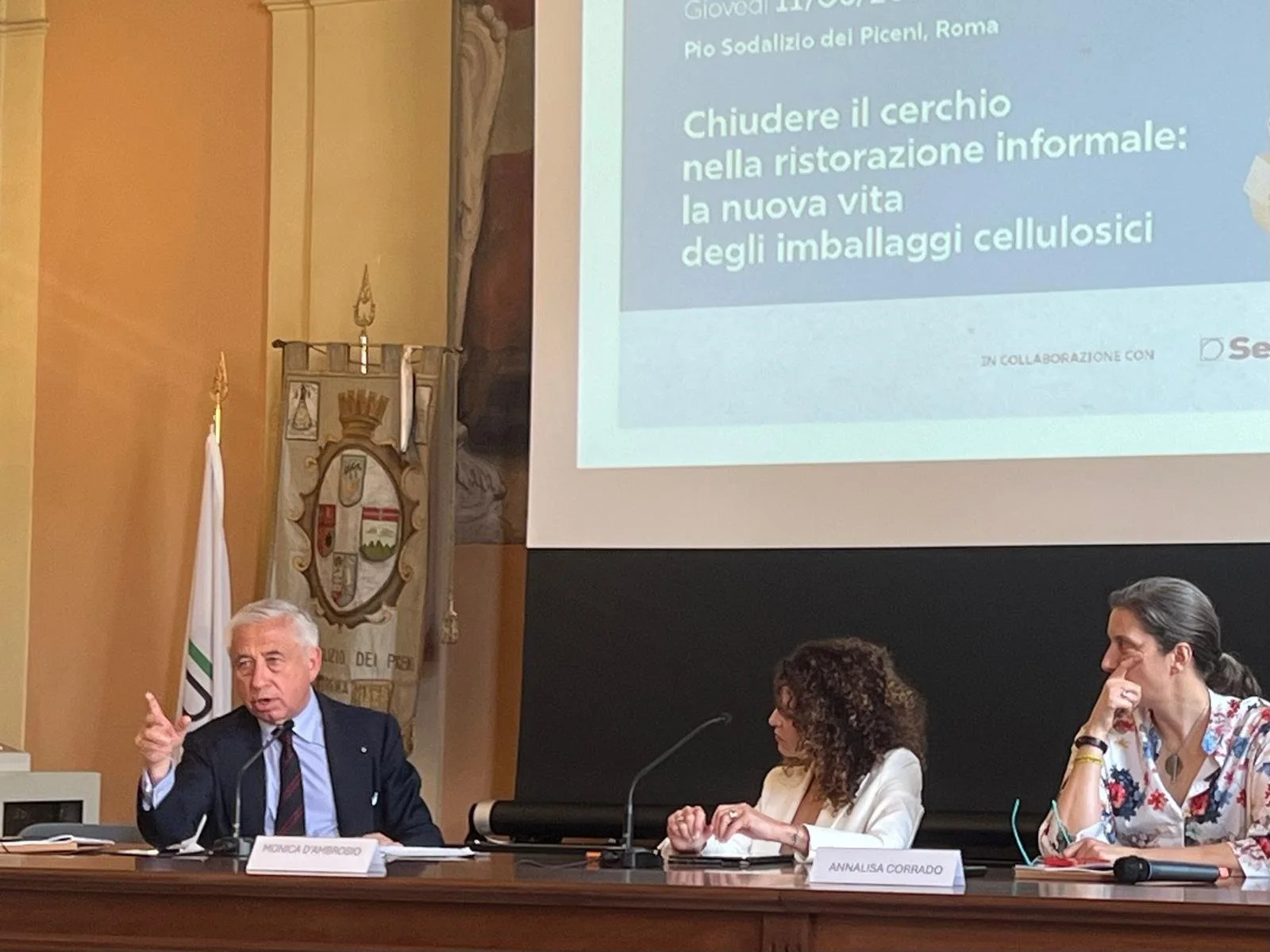
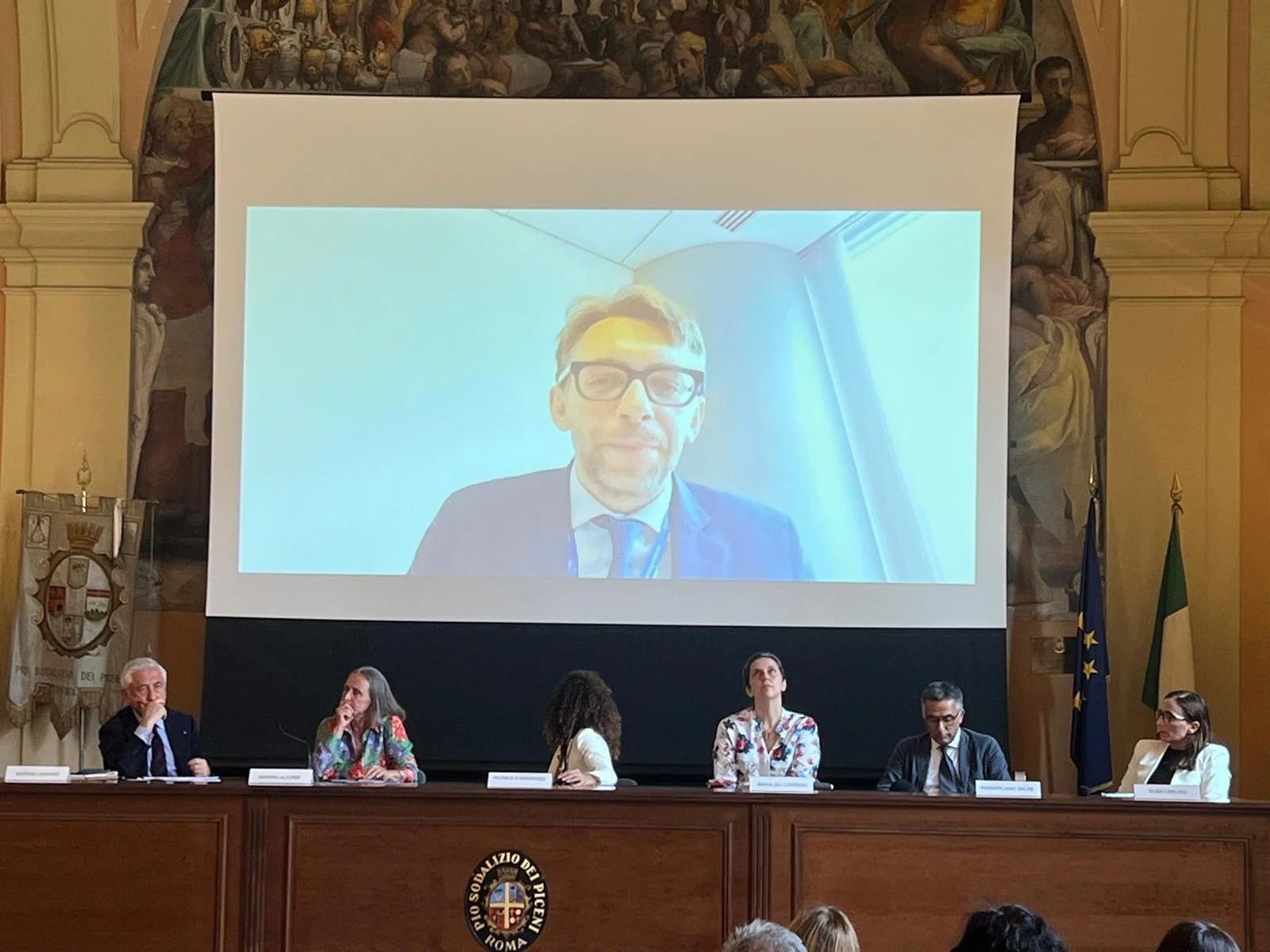
“Education, awareness and the quality of collection systems are essential factors for further improving results. Over the last few decades, Europe has built one of the world’s most advanced circular economy models, and Italy is one of its leading examples. Initiatives such as this demonstrate that environmental sustainability, consumer protection and industrial competitiveness can grow hand in hand.”
With these words, Antonio D’Amato, President of Seda International Packaging Group, opened the discussion around the results of a new study presented on 11 June in Rome by Comieco, in collaboration with Seda and McDonald’s, highlighting how the fast-food sector can become a powerful laboratory for circular economy innovation.
The research, commissioned by Comieco, Seda and McDonald’s and carried out by Ambiente Italia, analysed waste production and management in seven McDonald’s restaurants located in Milan, Baranzate, Parma, Perugia, Rome, Bari and Palermo. By directly observing the behaviour of around 1,000 customers and tracking the destination of collected materials, the study provides one of the most comprehensive analyses ever conducted on packaging waste management in the Italian quick-service restaurant sector.
The results are striking.
A CIRCULAR ECONOMY MODEL DELIVERING MEASURABLE RESULTS
A total of 84% of waste generated in the restaurants surveyed was correctly placed in separate collection streams, compared with an average of 68% in Italy’s urban waste collection system. The overall recycling rate reached 67%, significantly higher than the national average of 54%.
Paper-based packaging proved to be a key driver of these results. According to the research, more than 88% of packaging and service items used in the restaurants — including napkins, placemats, straws and food containers — are cellulose-based. The recycling rate for paper packaging reached 87%, confirming the effectiveness of paper as a renewable and highly recyclable material.
For Seda, these figures demonstrate the value of a long-term industrial strategy centred on renewable materials, eco-design and circularity.
“From this research emerges a concrete and consolidated circular economymod el,” said D’Amato. “The collaboration between industry, technological innovation, foodservice operators and the recycling value chain demonstrates how used packaging can be transformed into new resources, generating measurable environmental benefits.”
TOWARDS ZERO UNSORTED WASTE
“The data shows that the system implemented in restaurants delivers better performance than the Italian average: 84% of total waste is placed in separate collection bins, compared to 68% in urban waste collection,” explained Duccio Bianchi, co-founder of Ambiente Italia: “The overall recycling rate is also higher, standing at 67% compared to the national average of 54%.”
According to Roberto Di Molfetta, General Manager of Comieco, by further improving sorting quality, strengthening collection logistics and increasing paper recovery rates, the fast-food sector has the potential to reduce unsorted waste to zero.
SEDA’S LONG-STANDING COMMITMENT TO PAPER-BASED INNOVATION
Founded in Naples in 1964, Seda has built its growth around a pioneering choice that was made decades before sustainability became a mainstream concern: investing in paper-based packaging solutions for the food industry. Today, the Group is one of the world’s leading manufacturers of food packaging, operating 13 production sites across Europe and the United States and serving many of the world’s largest food and beverage brands.
The company continues to place sustainability at the centre of its industrial strategy. All paper packaging produced by Seda is made using fibre sourced exclusively from certified and sustainably managed forests.
WHY PAPER MATTERS
“Paper is an extraordinary material,” D’Amato noted. “The fibres used in food packaging can be recycled up to 25 times. At Seda, we manufacture all our paper packaging using raw materials sourced exclusively from certified forests, where three to five new trees are planted for every tree harvested.”
The study also highlights another critical success factor: consumer engagement.
CONSUMERS AS PART OF THE SOLUTION
Customer sorting errors were limited to approximately one in ten cases, demonstrating that clear information, effective collection systems and simple disposal procedures can significantly improve recycling performance.
“The performance recorded within the McDonald’s system is particularly significant because it demonstrates the decisive role consumers can play,” D’Amato said. “When people are informed and actively involved, they become part of the circular economy.”
A PARTNERSHIP DRIVING PROGRESS
The partnership between Seda, McDonald’s and Comieco shows how collaboration across the entire value chain can deliver measurable results.
“Thanks to our continued commitment and investment in innovation and sustainability, as well as the strong partnerships developed across McDonald’s supply chain, we have progressively improved our environmental performance in packaging and recycling across our more than 800 restaurants,” said Elisa Carlino, Supply Chain Director at McDonald’s Italy.
“Throughout this journey, we have remained focused on food safety, functionality and customer experience – all essential requirements in our sector. As a company serving 1.3 million customers every day, we feel a responsibility to continue and strengthen our transition towards a circular economy and to help drive progress across the entire quick-service restaurant industry.”
The research suggests that the sector still has room for improvement. Around 14% of materials placed in paper collection bins should actually be sorted into different waste streams, while collection services are not yet implemented uniformly across all municipalities.
However, the findings also point to a remarkable opportunity.
For D’Amato, this experience also carries a broader message for Europe.
“European industry has demonstrated for decades that it can lead the world in environmental innovation and circular economy solutions. Today, Europe possesses the technologies, know-how and industrial capabilities needed to build more sustainable production models, both within its borders and beyond.”
In a world facing growing environmental, economic and geopolitical challenges, he argues that sustainability cannot be separated from industrial competitiveness.
“To spread circular economy principles on a global scale, we need a strong industrial system capable of innovating, investing and producing. Without industry there is no innovation, no high-quality employment and no ability to export sustainable models.”
The study demonstrates exactly that. Circular economy is not merely a matter of waste management. It is the result of cooperation between industry, consumers, researchers, recyclers and public authorities. When all parts of the system work together, packaging does not become waste. It becomes a resource. And that is where sustainability, innovation and competitiveness meet.
Read more: